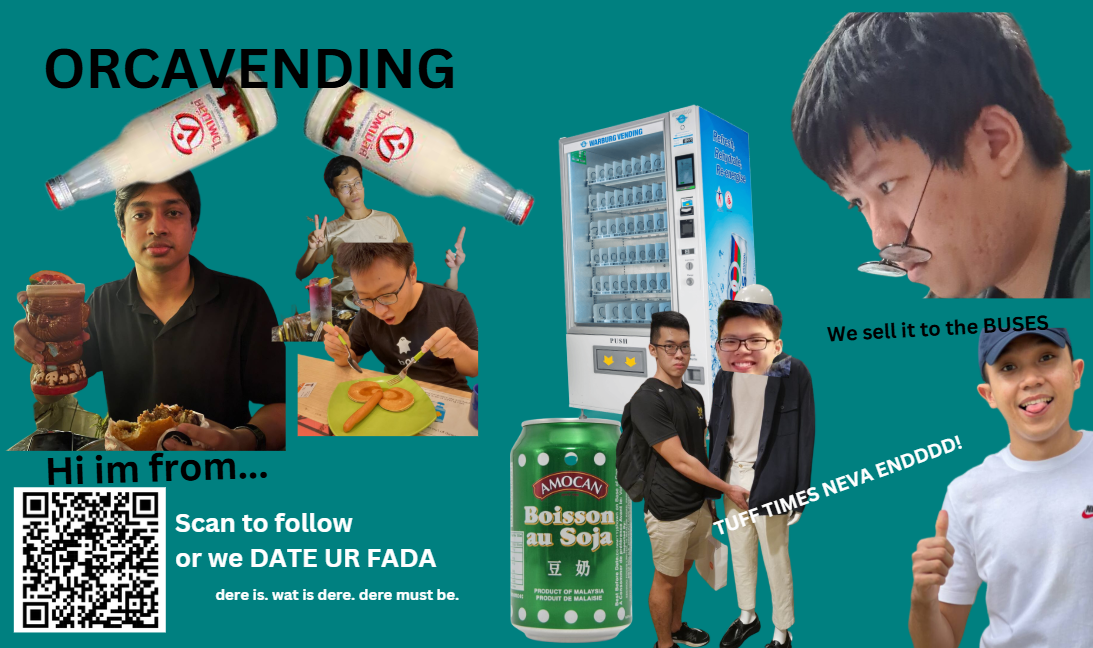
The Problem With Explaining "Stradej" to AI
Like many people in AI recently, I have spent an unhealthy amount of time building personalised chatbots. Some were for school projects, some for hackathons, and some were just me trying to see how far prompting could go before a model stopped sounding like a bot and became more human.
And for a long while, I thought it was a prompting problem. I mean, big corpus and massive params probably mean the model has been trained on many conversations before right?
Maybe the issue was tone. Maybe memory systems. Maybe the prompt just needed to be longer or contain k-shot examples, more conversation history, more personality tuning, more information about the user. But no matter what I did, the chatbots would eventually drift back into sounding unmistakably bot-like.
“I understand how you feel”. “Thank you for sharing that with me”. “That must have been difficult”
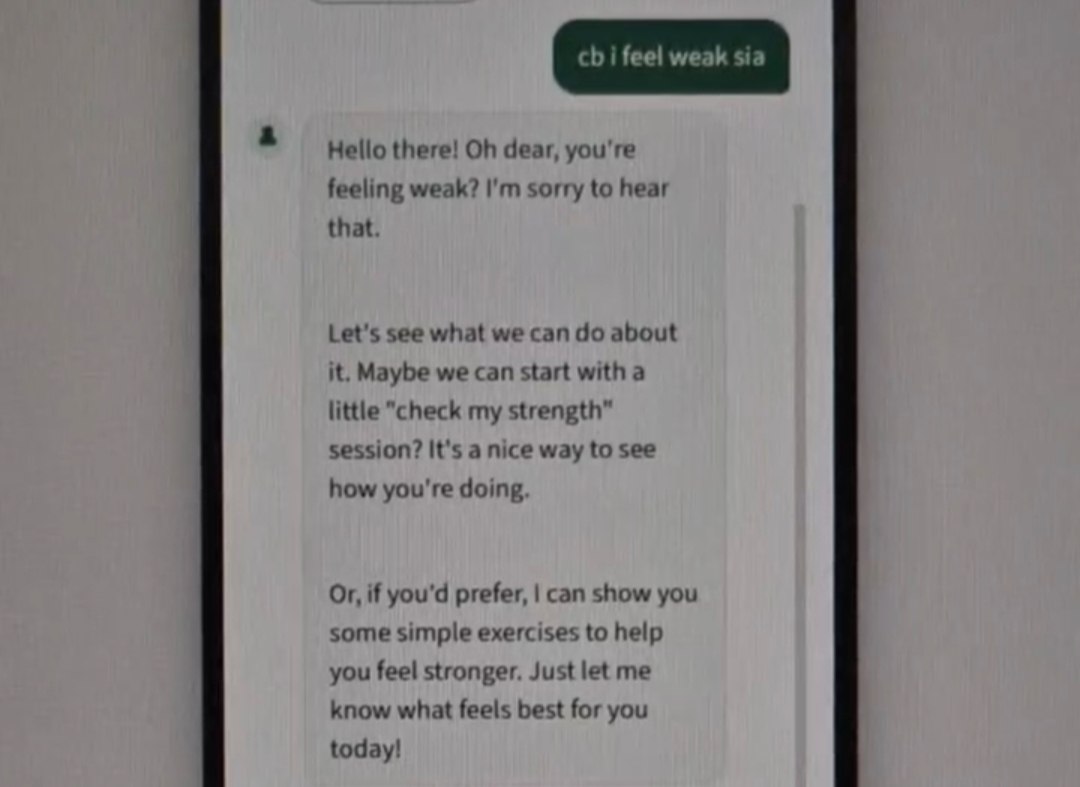
That’s so NPC bruh.
The chatbots that were built to be “personalised” felt less like talking to a friend, and more like talking to someone who has read every conversation in the world but never participated in one. Technically correct, but emotionally sterile…
At first, I thought it could be a vocabulary issue. But now, I think it might actually be a problem on shared experience.
I should know. I lived inside one for four years. Because somewhere in RC4, my very first orientation group Anakin invented a language.
“Communicacion officiale.”
“Sensational stradej.”
“INSH BENCH”
If you overheard us speaking, you would probably assume we all got dem tisms (got autism), not entirely wrong.
To us, it somehow became a fully functional and coherent language.
Nobody planned it, it wasn’t intentional. There was no moment where we sat down and decided: “hey let’s do a 1-to-1 mapping of boring English words to our lexicon so that we can add extra hashmap lookup overhead”. It just slowly emerged after enough suppers, late-night feef (FIFA) sessions, random corridor encounters, and 4L mid-study-and-job-apps-sesh conversations.
At first it was just stupid pronunciations. One of the us kept saying “stradej” instead of “strategy.” Then “supa” instead of “super.” “Communicacion officiale” and “Here We Go” became our way of announcing that something was confirmed, inspired by football transfer announcement videos. “Dere is” also somehow evolved from “there is” into an entire phrase connected to supper plans, opportunities, or the vague possibility of food.
Then the language started mutating on its own.
A new word could appear at lonch and by dinnah everybody already understood how to use it. Nobody asked for definitions. Nobody needed context. Somehow the vibe alone was enough. And honestly, even now, I still cannot fully explain the definitions for some of them.
There are phrases that technically mean nothing, but emotionally make perfect sense. Sometimes one person just says “oh oh” across the corridor and everybody instantly understands the situation without another word being spoken. Someone brought a girl over. Someone is sending greetings. Somebody just did something questionable.
No fixed definitions. No consistent semantics. But somehow, message conveyed.
Somewhere along the way, we accidentally developed our own familect, a private language built from repeated nonsense, shared context, and too many years living together.
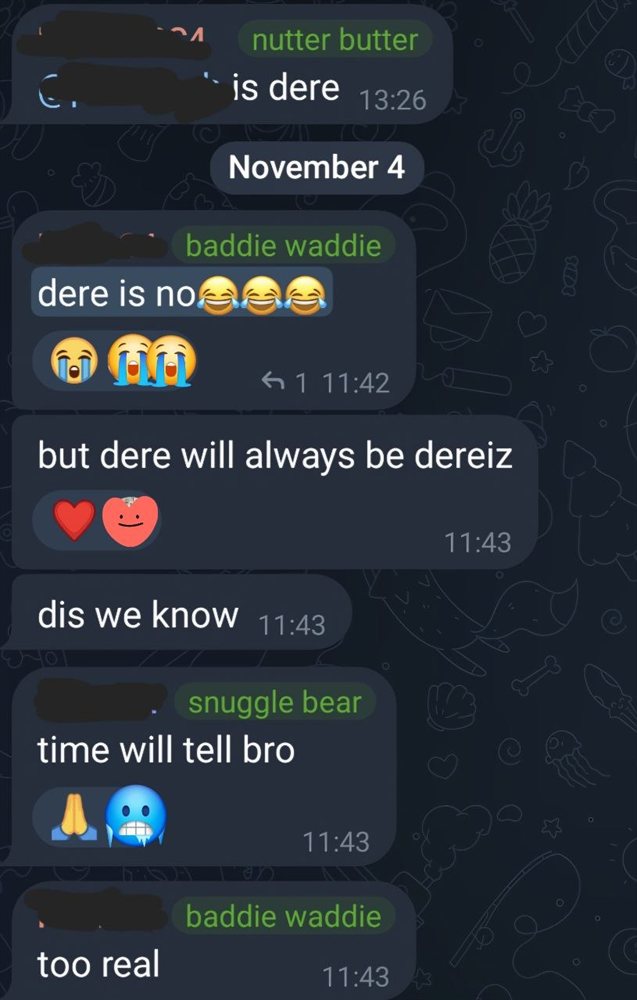 Average conversation between brudda in (insert some random city)
At some point, I realized the words themselves were never the important part. The meaning came from everything else behind it.
I think that is also why the group somehow stayed close even after almost four years. Most OGs peak during orientation itself, then slowly fade into occasional birthday wishes and Instagram story replies. But for us, the language never really died. Even now, random phrases still appear in our chats like old legacy software somehow still running in the background.
Objectively, this is probably linguistic terrorism FC (terrorist). But strangely, it is also sincere.
Having spent more time around AI and LLMs, I realized this might be why AI-generated writing still feels slightly different sometimes.
Not worse. Honestly, sometimes terrifyingly good. But there is a difference between reproducing language and reproducing the life behind the language.
An LLM could probably learn that “stradej” means idea or strategy or more. It could imitate the spelling patterns, the tone, the lowercase typing style, even the emojis. Given enough chat logs, it could probably generate something that looks convincingly “Anakin.”
But it was never actually there.
The model can learn the transcript, but it was never in the room.
It does not know who first said the word. It does not know why it became funny. It does not know why one variation sounds natural while another sounds forced. It does not know the exact combination of football memes, African internet humor, corridor encounters, sleep deprivation, and repeated exposure that somehow caused all of this to emerge naturally.
And more importantly, it cannot invent the next word from the inside. It will never be able to invent 3L ball
If one of us suddenly says some new fake phrase tomorrow, there is a good chance the rest of us would immediately understand the vibe of it. Not because we have seen it before, but because we understand the pattern behind it. The rhythm. The stupidity. The shared context.
That is not really a lexicon or tokenization problem.
It is a lived experience problem.
Yann LeCun once criticized current language models for learning language without truly grounding it in lived experience or a world model. I think that is partially why personalised chatbots still feel slightly hollow sometimes.
To a model, “dere is” is probably just broken tokenization.
To us, it carried years of accumulated meaning.
I realized how deeply this language had entered my brain during an internship interview once. The interviewer asked me what I thought about a product idea and, without thinking, I replied verbatim:
“Acktualee supa good stradej.”
Out loud. To a hiring manager.
He probably thought I was retarded, but luckily I caught myself halfway and quickly corrected it to “really good idea.” Still, the damage was already done mentally. That was when I realized Anakin language was no longer just a joke from orientation. Somewhere along the way, 4 years in RC4 had quietly fine-tuned my internal dialogue until phrases like “supa good stradej” started feeling more natural than actual English. It stopped being just slang and became part of my internal voice, my identity.
And honestly, maybe that is what all close friendships eventually become.
Not just memories, but tiny modifications to the way you think, speak, and interpret the world.
When people talk about AI sounding human, I think they usually focus on words, tone, or writing style. But I think the more human part of language is everything behind it. The history. The repetition. The years-long context window behind the words.
Maybe an LLM can learn the transcript.
But it was never really dere.
And maybe that is okay.
Because if anyone from Anakin ever asks:
“is dere?”
Dere is.
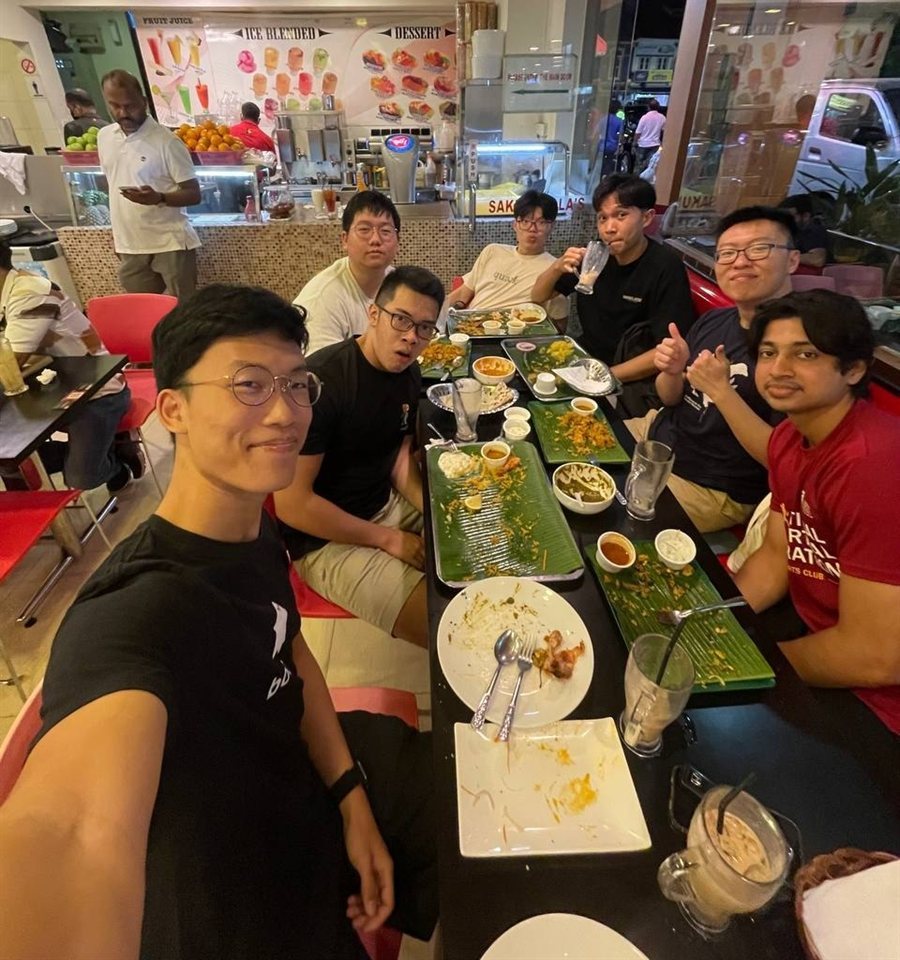 Tuff tiems neva ends, supa tuff, havitRLLYBAD